Italian Keys · Analysis
Villini Sallustiani, Rome
Ten villas off Via Veneto become a 108-key Mandarin Oriental. The cost on record and the figure in the 2025 transaction tables are not the same thing.
Key points
- Two figures sit on the public record: about €200 million of purchase and works, and a €170 million line in a 2025 transaction table.
- Whether that €170 million entry and the reported family-office stake are the same event is not established in public.
- The detail that changes the case is the cost line: the works budget moved from €80 million to €100 million.
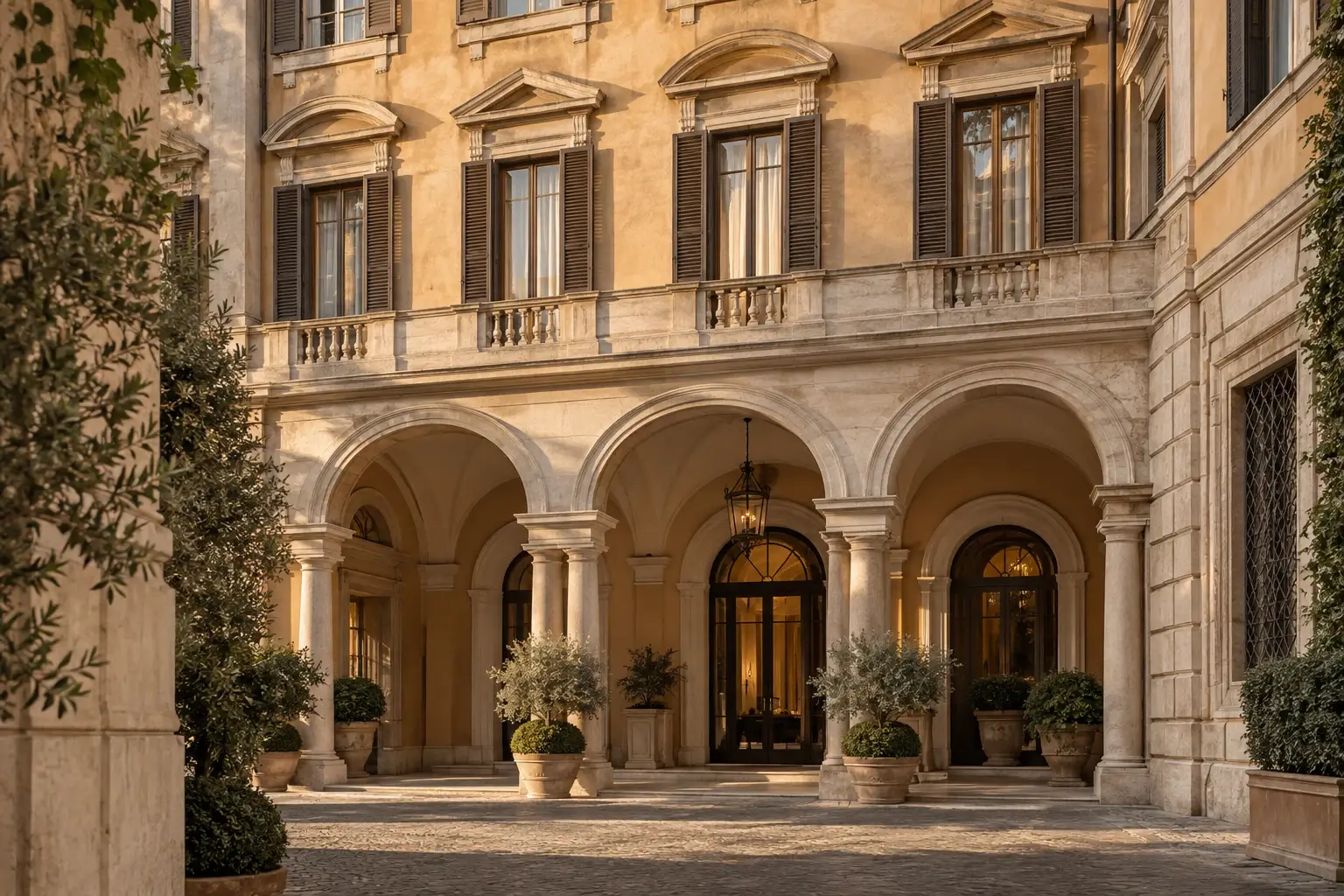
Ten nineteenth-century villas stand in a walled park between Via Sallustiana, Via Boncompagni, Via Piemonte and Via Quintino Sella, three minutes’ walk from Via Veneto. Rome knows them as the Villini Sallustiani, and for years as the Villini UniCredit, after the bank that occupied them. In the second half of 2026 they are due to open as a Mandarin Oriental with 108 keys.
The interesting thing about this asset is not the brand. It is that the public record contains two different numbers for it, and they do not describe the same event.
What is on record
Merope Asset Management bought the ten buildings from Colony Capital in 2021 for about €100 million. The debt was arranged by Intesa Sanpaolo and Banco BPM in equal shares. At the time of purchase, the budget for transformation and restoration was reported at €80 million.
By May 2024, when the scheme was announced with Mandarin Oriental, that second figure had become €100 million. Purchase and works together: €200 million, over a site of more than 18,000 square metres.
The scheme itself is well documented. 108 rooms and suites, more than forty of them with a private garden or terrace. Six restaurants and bars, with the bar on a rooftop terrace. A spa with an indoor pool and outdoor pools in the gardens. Rome would be Mandarin Oriental’s fifth address in Italy, after Milan and Lake Como, with Cortina d’Ampezzo and Porto Cervo announced behind it.
The second number
In the Cushman & Wakefield market report for the first half of 2025, Italian hotel investment came to roughly €1.7 billion, up 102% on the same period the year before, with international capital behind 51% of the volume. Among the named single-asset deals is one line: Mandarin Oriental Rome, Villini Sallustiani, €170 million.
The report does not name a buyer or a seller.
Ten weeks earlier, Il Sole 24 Ore had reported that one of the family offices managing the assets of the families that own Hermès (the Puech, Guerrand and Dumas families were named) had taken a stake in the vehicle that owns the hotel. The paper carried it as an unconfirmed account. No amount was given, no percentage, and Merope declined to comment.
So there is a €170 million entry in a transaction table, and there is an unconfirmed stake of undisclosed size. Whether they are the same event is not established anywhere in public.
Why the distinction is not pedantry
Divide the two numbers by the same 108 keys and the gap is plain. The documented €200 million of purchase and works is about €1.85 million per key. The €170 million line is about €1.57 million per key.
An investor who lifts the second figure out of a market report and uses it as a Rome luxury comparable is asserting three things at once: that the whole asset changed hands, that it changed hands at that price, and that it did so as a completed hotel. None of the three is supported. A minority stake in a development vehicle, priced off a business plan two years before opening, is not the same instrument as a stabilised asset trading between owners, and it should never sit in the same column.
What is not knowable yet
No ADR, no occupancy, no RevPAR: the hotel has not opened, so there is no trading history to read. No revenue and no EBITDA. The terms of the management agreement (base and incentive fees, length, any performance test, any key money) have not been published, and neither has the precise ownership split between the developer and the operator’s group.
Anyone modelling this asset today is modelling a construction programme and a brand, not a business.
The detail that changes the case
It is the cost line, not the room rate.
Between acquisition and announcement, the works budget moved from €80 million to €100 million: a quarter more, over roughly three years, on a listed nineteenth-century fabric sitting above the archaeological remains of the Gardens of Sallust. That is the ordinary arithmetic of an Italian conversion of this class: the revenue side is usually the part the market gets roughly right, and the cost and the calendar are the parts that move.
The opening has been stated as the second half of 2026 since May 2024, and as this issue goes out no opening date has been announced.
Sources
Every figure quoted carries the public source it came from, with its date. Where a figure cannot be verified, it does not appear.
- Il Sole 24 Ore: Rome, the Mandarin Oriental luxury hotel will open in the Villini Sallustianidated 19 May 2024
- Mandarin Oriental: Mandarin Oriental to open an urban oasis in the heart of Rome (press release)dated 17 May 2024
- BeBeez: Merope aprirà un resort di lusso a Roma con Mandarin Oriental; area acquisita nel 2021 da Colony Capital per 100 mlndated 20 May 2024
- Cushman & Wakefield: Hotel Market Beat 2025 H1, Italy (Davide Barbaro, Francesco Calia)dated 29 September 2025
- Il Sole 24 Ore: Hermès members land in Rome at the new Mandarin Orientaldated 30 May 2025
Read next
Practical guide
Selling a hotel in Italy: stages, documents, timing
Practical guide
Succession in a family-owned hotel: the options